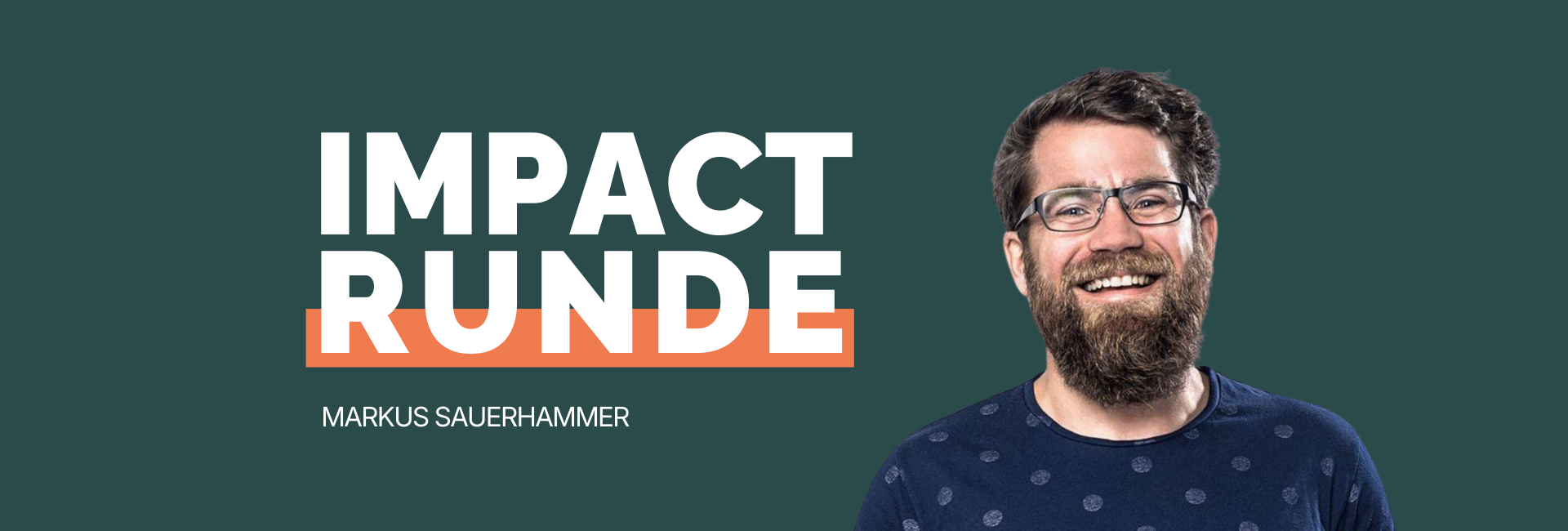
What happens when someone who once worked the soil starts redesigning entire economic systems? In our latest episode of Impact Runde, we spoke with Markus Sauerhammer: social entrepreneur, ecosystem builder, head of strategy and cooperation at SIGU, and one of Germany’s strongest voices for public value and mission-driven business. His path didn’t start in a startup hub or a strategy lab. It started on a farm. And maybe that’s exactly why his perspective feels different. Because Markus doesn’t just talk about impact, he thinks in seasons, cycles, and long-term responsibility. About planting things that might only grow years later. About building systems that actually last.
Listen to the full episode here! 👉 Spotify | Apple

Subscribe to our newsletter! 👉 Subscribe Now!
Get more conversations, tools and stories for impact founders straight to your inbox.
Before crowdfunding platforms and policy advocacy, there was agriculture. As a farmer, Markus experienced something many founders forget: you can’t force growth - but you can create the right conditions for it. That mindset stayed with him when he moved into entrepreneurship. Early ventures, experiments, a hemp-based leisure park. Some worked and some didn’t, but each step sharpened one core belief:
If business only maximizes profit, we all lose.
If business serves society, everyone wins.
That realization led him into social entrepreneurship - and eventually to building the infrastructure that enables thousands of others to create impact.
One topic that came up quickly in our conversation: being mission-driven doesn’t make things easier - It often makes them harder. Small purpose-led businesses are constantly competing with global corporations that optimize for scale and margins - not communities. So how do you survive? Markus’ answer: You don’t fight alone. You build ecosystems.
That’s where networks like SEND (Social Entrepreneurship Netzwerk Deutschland) come in. Co-founded by Markus, SEND mobilizes communities instead of waiting for investors or institutions to say yes. Instead of asking for permission, they create momentum.
Crowd funding isn’t just a financing tool. For Markus, it’s something bigger: A form of economic participation. A way to let people decide directly which ideas deserve to exist. A way for impact startups to get their first real proof: “Yes - people want this.” But it also exposes a painful truth: Our traditional financial system still struggles to understand or support purpose-driven companies. Which means: Policy has to change, too.
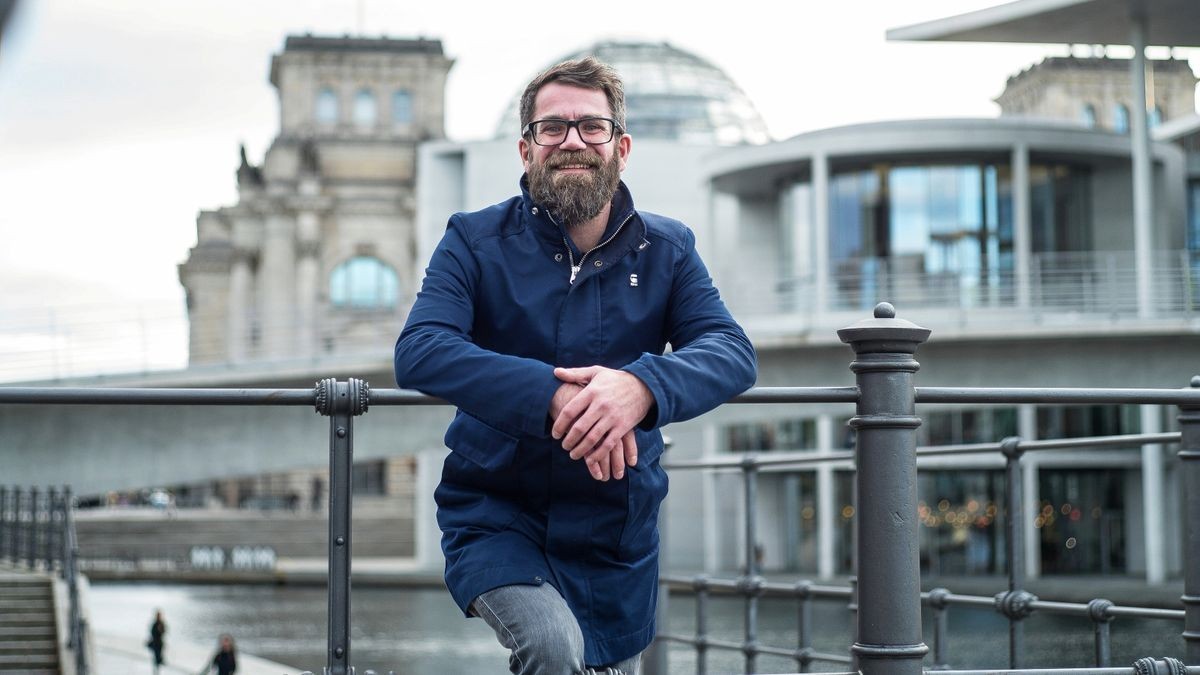
A strong mission alone isn’t enough. Markus talks a lot about something many founders overlook: Legal and structural design. If you build a company for the common good, but sell it later to the highest bidder - what happens to the mission? That’s why initiatives like the Stiftung Verantwortungseigentum advocate for new ownership models that protect purpose long-term. Because real impact isn’t just about what you build today. It’s about what stays intact tomorrow.
This conversation isn’t just inspiring - it’s practical. If you’re building a startup for good, this episode will help you answer some key questions:
How can I finance impact differently?
Do I need community before capital?
Should my legal structure protect my mission?
How political does entrepreneurship need to be?
And: how do we change systems, not just symptoms?
When we asked Markus what the future should look like, his answer was simple: We don’t need more unicorns. We need more companies that serve communities, think long-term, collaborate across sectors, and measure success beyond profit.
In other words: An economy that works for society - not the other way around. And that’s exactly what the Impact Runde is about. Stories of people who are already building that future. One venture at a time.
Join our community for insights, events, and new episodes. 👉 Follow us Now!